
The price of carbon credits is influenced by a wide range of factors, from the underlying project types to the intricacies of market demand and supply. Understanding these price determinants is crucial for businesses, investors, and policymakers looking to navigate the voluntary carbon markets. Carbon credits are used by companies to offset their emissions by funding projects that reduce or capture greenhouse gases. The cost of these credits varies significantly, and in this article, we explore the key elements driving the price of carbon credits in today’s marketplace.

One of the most significant factors affecting the price of carbon credits is the project type and the methodology used to quantify and verify emissions reductions. Projects that reduce emissions through energy efficiency, renewable energy installations, or forest conservation are some of the most common and typically generate credits. However, the methodology used to validate these reductions is equally important.
For instance, projects that follow internationally recognized standards like the Gold Standard or Verra are often priced higher because they undergo rigorous validation and verification processes. These methodologies ensure that the emission reductions are real, measurable, and additional. The additionality criterion, meaning that the emission reductions would not have occurred without the project, is a critical factor in determining the price. Projects that meet this additionality criterion and are validated by independent third parties can command higher prices due to their reliability.
Projects using high-quality methodologies, such as Afforestation and Reforestation (A/R), often attract higher prices because of their long-term environmental impact and the perceived stability of the carbon sequestration process. On the other hand, low-cost technologies or those with less stringent monitoring might produce cheaper carbon credits, but they are generally considered less credible and, therefore, less valuable.
A real-life example in Southeast Asia is the Borneo Rainforest Rehabilitation Project in Malaysia, certified by Verra under the VCS (Verified Carbon Standard) and following the Afforestation and Reforestation methodology. This project focuses on the restoration of degraded forest land in Borneo, a region crucial for biodiversity and carbon sequestration. By planting native tree species and rehabilitating ecosystems, the project sequesters carbon over a long period, providing environmental benefits while combating deforestation. Due to its high environmental integrity, the project’s carbon credits are priced higher in the voluntary carbon market. The long-term impact of restoring this vital forest, along with the positive effects on local wildlife and communities, makes it a valuable example of a high-quality A/R project in Southeast Asia that attracts premium prices.

Geography also plays a pivotal role in determining the cost of carbon credits. Projects in developing nations, especially those located in tropical regions, tend to generate higher carbon credits due to the high carbon sequestration potential of forests in these areas. These projects, such as those in the Amazon Rainforest, are perceived as vital for combating global climate change, often attracting premium prices due to their co-benefits, such as biodiversity preservation and socio-economic development.
However, the location also affects the logistical costs associated with implementing and verifying the project. Remote areas can lead to higher monitoring and transportation costs, which ultimately increase the price of credits produced by such projects. For instance, while forest conservation projects in Southeast Asia may command a higher price, the cost to operate and monitor these areas adds to the final price of the carbon credit.
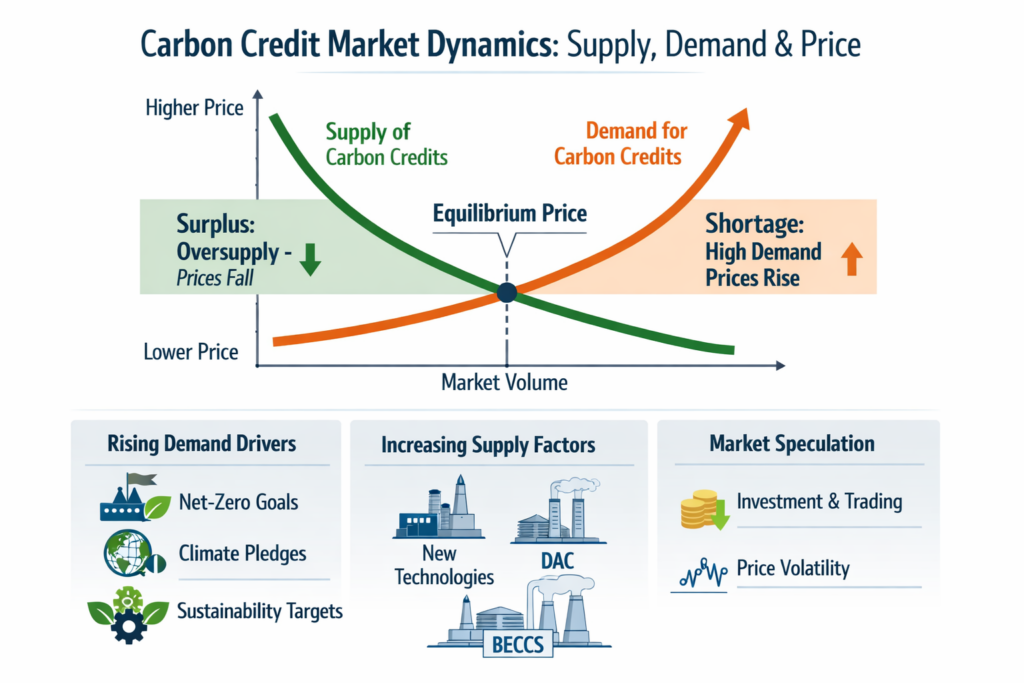
The voluntary carbon credit market is governed by classic economic principles: supply and demand. As businesses and governments across the world commit to reducing their carbon footprints, demand for carbon credits continues to grow. This surge in demand is driven by companies looking to offset emissions to meet net-zero goals, climate pledges, and sustainability targets.
The market dynamics of supply and demand influence the price of carbon credits. When demand outpaces supply, the price of carbon credits tends to rise. Conversely, if there is an oversupply of credits in the market, prices may decrease. The emergence of new carbon credit suppliers and technologies, such as direct air capture and bioenergy with carbon capture and storage, could increase the overall supply of credits, potentially lowering prices unless demand keeps up.
In addition, market speculation also plays a role in driving prices. Financial institutions and intermediaries may purchase carbon credits in bulk, anticipating higher prices in the future as regulatory pressures mount. This speculative demand can create price volatility in the carbon credit market.
Carbon credit prices are also heavily influenced by the verification and certification process. Projects must undergo verification by third-party organizations, which ensures that the claimed emissions reductions are legitimate. The cost of verification depends on the complexity and scale of the project. Smaller projects may incur lower verification costs, but larger projects in challenging environments or with complex methodologies may face higher costs.
The credibility and reputation of the certification body also influence the final price. Certifications from highly respected entities, such as Gold Standard or Verra, add value to carbon credits. These organizations impose strict standards to ensure that credits are not only real but also contribute positively to sustainable development. Therefore, projects seeking these certifications often have to bear higher upfront costs, which are reflected in the price of the credits.
The co-benefits of a carbon credit project—such as promoting biodiversity, supporting local communities, or improving water quality—can also affect the credit’s price. These additional benefits enhance the project’s overall appeal and can help justify a premium price. Carbon credits linked to projects with significant co-benefits are often seen as more valuable in the marketplace.
The Kasigau Corridor REDD+ Project in Kenya is a prime example of how co-benefits such as biodiversity conservation and community development can drive up the price of carbon credits. The project primarily generates carbon credits by preventing deforestation, but it also has significant co-benefits, including the protection of endangered species like elephants and Grevy’s zebra, and the provision of local benefits like healthcare, education, and clean water infrastructure. These additional social and environmental benefits make the project more attractive to buyers, especially companies looking to demonstrate broader sustainability commitments.
These co-benefits contribute to the project’s ability to command higher prices in the voluntary carbon credit market. As companies increasingly seek to meet not only carbon reduction goals but also their Environmental, Social, and Governance (ESG) targets, credits tied to projects like Kasigau Corridor, which deliver long-term environmental and community benefits, are seen as more valuable. This market perception of greater impact and reduced risk drives demand for these credits, ultimately allowing them to be sold at a premium compared to credits that focus solely on carbon sequestration without additional co-benefits.

Finally, the evolving regulatory landscape plays a significant role in shaping the price of carbon credits. In some regions, the carbon credit market is heavily influenced by government regulations, such as carbon taxes and cap-and-trade schemes. These regulatory frameworks create demand for carbon credits, as companies are required to offset their emissions to comply with the rules. The strength and stringency of such regulations will likely continue to affect the price of carbon credits in the future.
Additionally, the structure of the carbon credit market—whether voluntary or compliance-based—has a direct impact on pricing. Compliance markets, where credits are tied to mandatory regulations (such as the EU Emissions Trading Scheme), tend to have more stable and higher prices due to the guaranteed demand. On the other hand, voluntary markets can experience more fluctuation, as the demand is driven by voluntary corporate and individual actions.
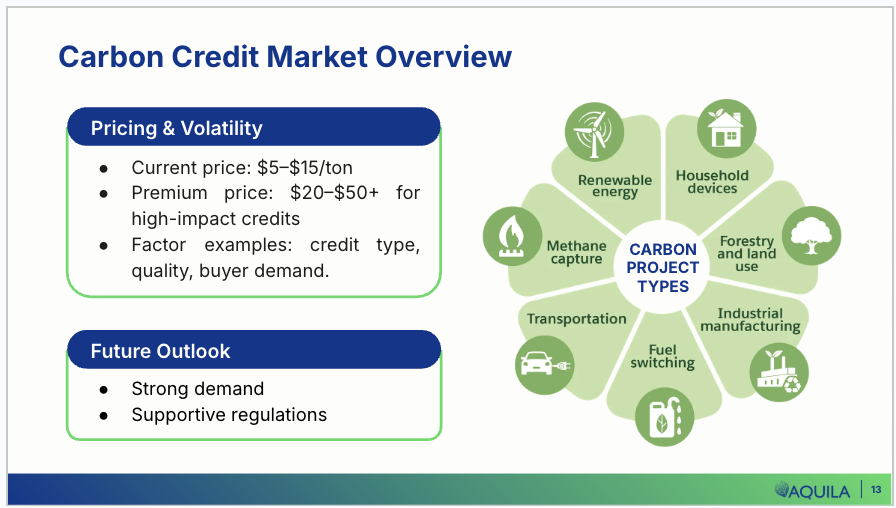
The cost of carbon credits is shaped by a combination of technical, economic, and regulatory factors. From the type of project and its geographical location to market dynamics and certification costs, multiple variables influence the final price of carbon credits. Understanding these factors is critical for businesses, investors, and policymakers seeking to engage with carbon credit markets effectively. As the global demand for carbon offsets increases and market mechanisms evolve, carbon credit prices are likely to continue fluctuating, making it essential to stay informed about these key drivers.
By staying up to date on market trends and project developments, stakeholders can make informed decisions and contribute to achieving global climate goals.