
Vietnam is on the cusp of becoming a carbon market leader in Southeast Asia. With the official approval of its Emissions Trading System (ETS) under Decision No. 263/2026, signed by Prime Minister Tran Hong Ha in February 2026, the country has advanced from policy deliberations to market readiness. This ambitious move positions Vietnam as a key player in carbon pricing, setting the stage for a thriving carbon market that will influence business strategies, regulatory frameworks, and international climate negotiations.

The Vietnam ETS pilot phase is scheduled to begin with the allocation of carbon allowances for 2026. This pioneering step is driven by Vietnam’s commitment to combatting climate change, as enshrined in the Paris Agreement and its own Nationally Determined Contributions (NDCs). The country has set ambitious goals to reduce greenhouse gas emissions by 9% by 2030 and achieve net-zero emissions by 2050. The implementation of the ETS is a key mechanism that will help meet these targets by creating a robust system for carbon credit allocation, trading, and pricing.
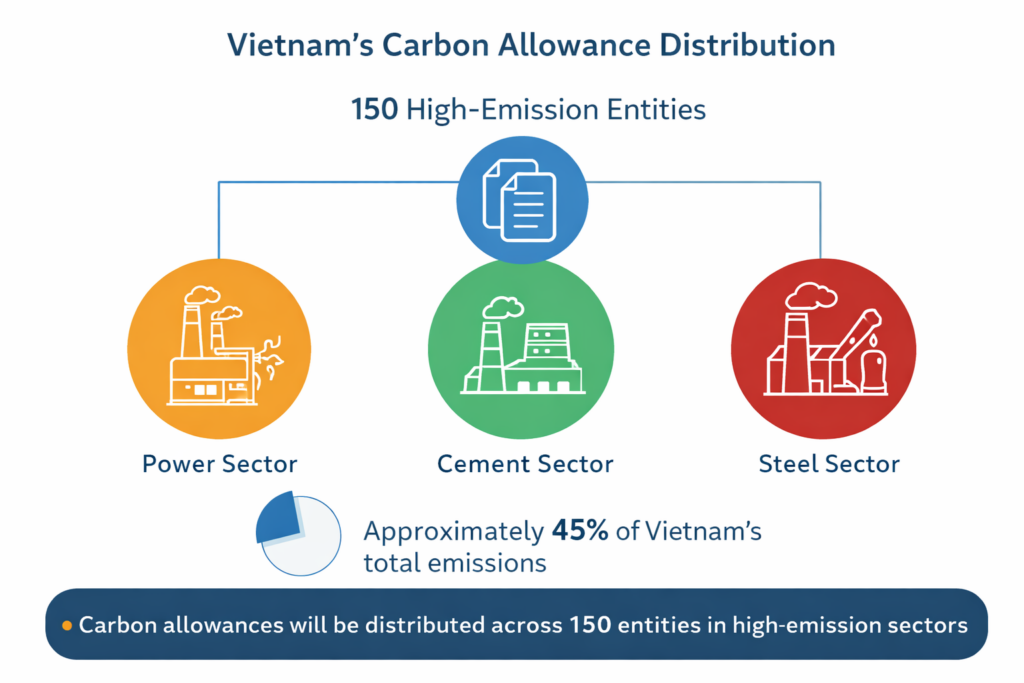
These allocations will be distributed across 150 entities in high-emission sectors, including power, cement, and steel. This is significant because these sectors represent approximately 45% of Vietnam’s total carbon emissions. Businesses within these sectors will be required to hold carbon allowances equivalent to their emissions, creating a financial incentive to reduce emissions and invest in cleaner technologies.
Vietnam’s carbon market design shares striking similarities with existing ETS frameworks in countries like China, Indonesia, and the European Union. For instance, the Chinese ETS, launched in 2021, began with free allocation of allowances to large emitters, with plans to transition toward a market-driven system by introducing auctions in the future. Similarly, Indonesia’s ETS is focused on the energy sector, aligning with the government’s efforts to cap emissions from its fossil fuel-dependent industries.
However, the key difference in Vietnam’s ETS framework lies in its gradual transition from allocation to auctioning, which reflects a pragmatic approach aimed at helping companies adapt without facing financial hardship during the early stages. This method aims to minimize economic disruption and provide a fair allocation of allowances to key industries, ensuring a smooth transition to a fully functioning carbon market.
Vietnam’s ETS is built on a solid legal and institutional framework that facilitates the implementation of carbon pricing mechanisms. As mentioned earlier, the issuance of Decree No. 29/2026 established the legal architecture for the carbon trading market. The decree specifies the rules for carbon allowance allocation, registration, custody, and trading. This framework aligns with international standards, drawing inspiration from the EU ETS and California’s cap-and-trade program, both of which have proven successful in integrating carbon markets into broader sustainability efforts.
Key Institutions Involved:
The establishment of these institutions ensures a transparent, market-driven process, fostering investor confidence and promoting financial innovation in the climate-tech sector.

The introduction of the ETS will have a direct financial impact on businesses within the power, cement, and steel sectors. These industries are not only among the largest emitters of carbon in Vietnam but also the hardest to decarbonize. To meet the allocation requirements, companies will be encouraged to adopt cleaner technologies, improve energy efficiency, and explore carbon capture technologies.
Example: The power sector is likely to face the biggest challenge. The state-owned Vietnam Electricity Group (EVN), which generates most of Vietnam’s power from coal-fired plants, will need to overhaul its business model to reduce emissions, either by transitioning to renewable energy or purchasing carbon allowances. This aligns with Vietnam’s goal to increase renewable energy in its power mix to 30% by 2030 and reduce coal reliance.
One of the leading companies in the Vietnam cement industry is Vissai Cement, a major player that has already started transitioning to more sustainable production practices. Vissai Cement’s approach serves as an example of how companies can align with the ETS while maintaining operational efficiency and competitiveness.
A significant part of Vissai Cement’s strategy has been the investment in energy-efficient kilns. These kilns are designed to use less energy per ton of cement produced, thus reducing CO₂ emissions.
The technology behind these kilns focuses on:
By upgrading to these energy-efficient technologies, Vissai Cement has reduced its carbon footprint per ton of clinker produced, which will help the company reduce its overall emissions under the ETS.
Beyond upgrading kilns, Vissai Cement has also embraced alternative fuels in its production process. Alternative fuels are typically derived from waste materials, such as biomass, plastics, and industrial by-products that would otherwise be discarded. By substituting traditional fossil fuels like coal with these sustainable alternatives, the company significantly reduces its carbon emissions.
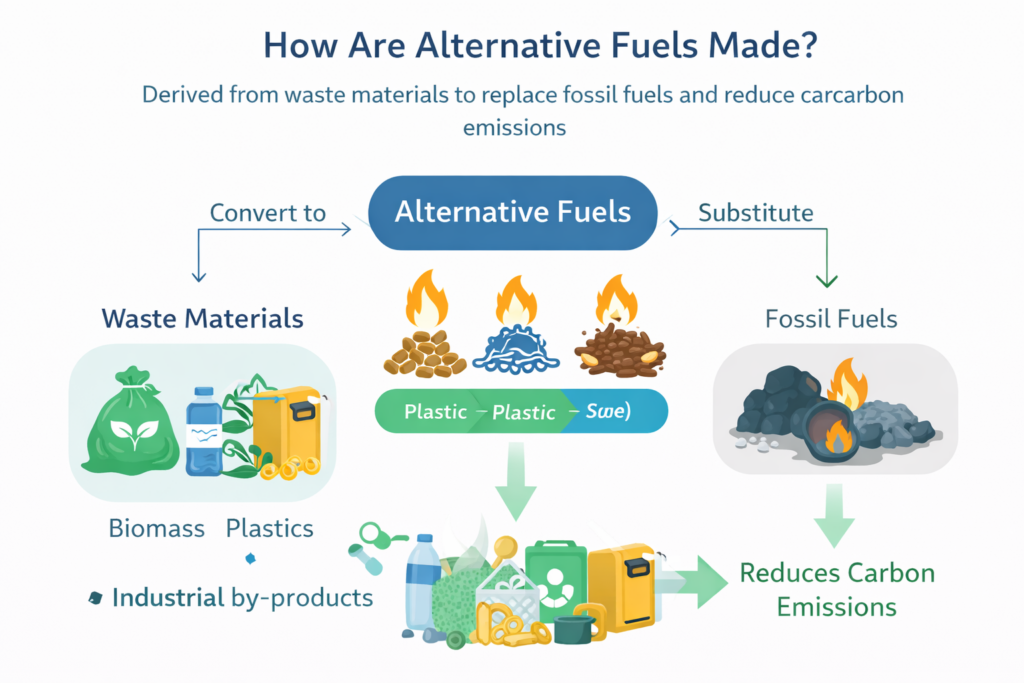
For example:
Tire-derived fuel and plastics are often used as alternative fuels, which provide high calorific value but release far less CO₂ compared to coal.
Agricultural by-products, like rice husks and wood chips, are another sustainable alternative that also reduces the cement industry’s reliance on non-renewable resources.
These investments in energy-efficient kilns and alternative fuels not only help Vissai Cement comply with the ETS regulations, but they also position the company to be more competitive as carbon allowances become more expensive. Companies that have already integrated sustainable practices will have a cost advantage over those that are slower to adopt, as they will need to buy fewer carbon allowances.
Vietnam’s carbon market strategy is not just about national compliance. The country aims to integrate its system with global carbon markets, creating opportunities for cross-border carbon credit trading. This integration would allow Vietnamese companies to export carbon credits generated from green technologies and renewable energy projects to other nations in the Asia-Pacific region and even the European Union.
Vietnam’s ambitious goal is to align its carbon market with the Paris Agreement’s Article 6 provisions, which allow for international carbon trading. This would open new opportunities for climate financing and sustainable investment in sectors like solar, wind, and battery storage.

With the introduction of Vietnam’s ETS, the country is setting a global example of how emerging markets can leverage market-driven tools to combat climate change while simultaneously creating new economic opportunities. By aligning its domestic carbon trading market with international systems, Vietnam is positioning itself as a leader in Southeast Asia in the fight for a carbon-neutral future. Businesses will need to adapt quickly, leveraging carbon credit markets and emissions reduction technologies to remain competitive.
In the coming years, Vietnam’s ETS will not only shape the nation’s environmental and economic policies but will also become a key pillar in the broader global movement toward sustainable growth.
As Vietnam continues its efforts to decarbonize and sustainably manage carbon credits, the success of this initiative could serve as a model for other Southeast Asian nations looking to create their own carbon trading frameworks.