
As the world accelerates towards meeting climate goals, the carbon credit market is on the cusp of transformative change. The journey towards carbon neutrality and beyond will be shaped by the rise of carbon credits as a cornerstone of global climate strategies. The future of carbon credits offers a thrilling glimpse into how businesses, governments, and investors will reshape industries and ecosystems to counteract the environmental crisis.
Over the past few years, the voluntary carbon credit market has experienced exponential growth, but it has also come under scrutiny. From corporate commitments to net-zero emissions to regulatory frameworks under the Paris Agreement, carbon credits are becoming an indispensable part of corporate climate strategies. However, as the carbon market matures, new dynamics are emerging, including the shift towards higher-quality credits, evolving pricing mechanisms, and stronger regulatory frameworks. These changes present both challenges and opportunities for stakeholders involved in carbon trading and offsetting.

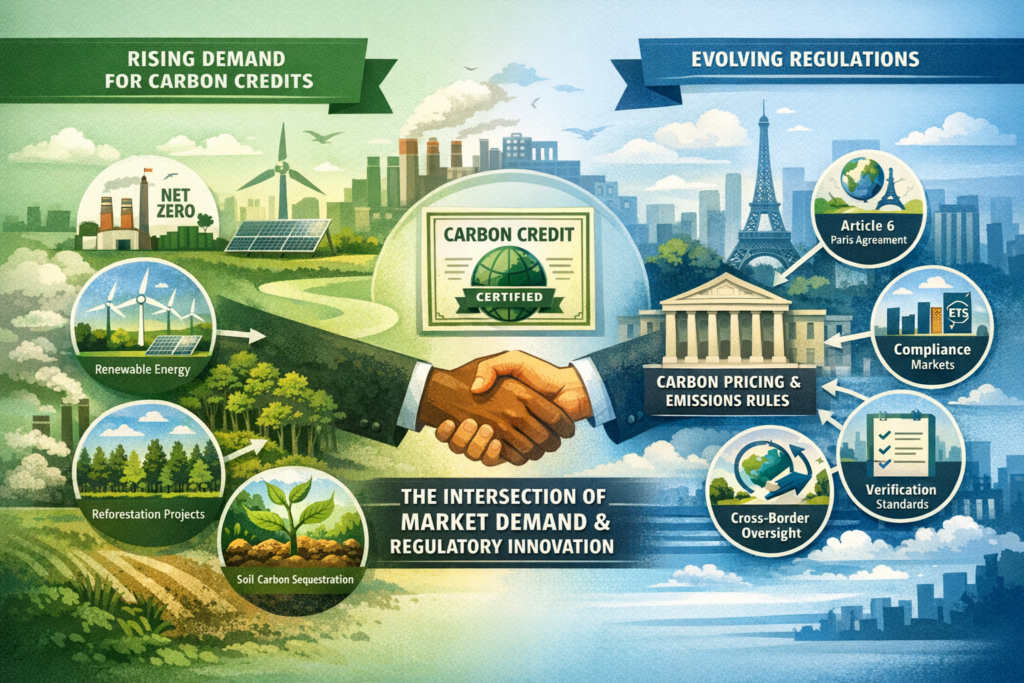
One of the most significant drivers of the carbon credit market’s evolution is the increasing demand from businesses and governments to fulfill their climate pledges. Major corporations across the globe, from tech giants to manufacturers, are pledging net-zero emissions targets, which have led to an increased reliance on carbon credits to offset hard-to-reduce emissions. As a result, demand for high-quality carbon credits is expected to rise substantially. The demand is particularly strong for carbon credits generated from projects with verifiable, permanent climate impacts, such as renewable energy, reforestation, and soil carbon sequestration.
As the market grows, so does the need for robust regulatory frameworks that provide clarity and transparency to buyers and sellers alike. With the upcoming regulatory developments, especially under mechanisms like Article 6 of the Paris Agreement, carbon credits are expected to be more closely integrated with international climate regulations. The expansion of compliance markets will be a defining feature of the carbon credit landscape, with more governments implementing carbon pricing systems and mandatory emissions reductions for industries. However, this regulatory shift will not be without challenges, particularly in terms of coordination and verification of carbon credits across borders.
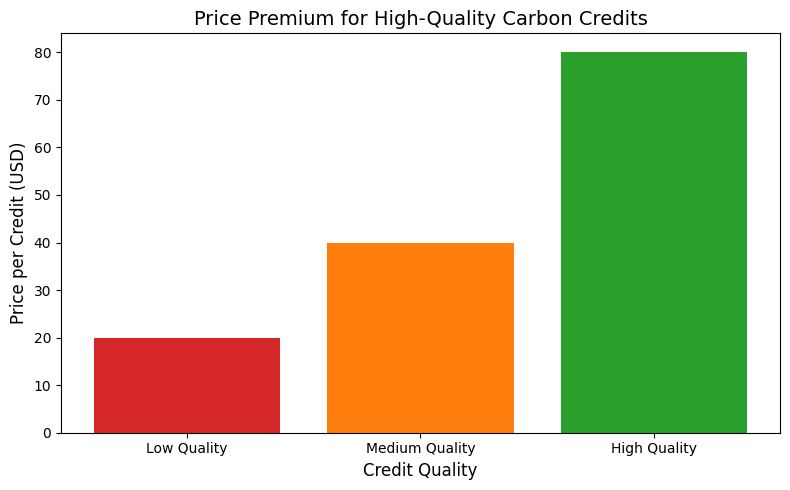
The evolution of carbon markets will be marked by a shift towards high-quality carbon credits, with an increasing emphasis on ensuring that these credits represent real, additional, and permanent emissions reductions. As the carbon credit market matures, the focus will shift from quantity to quality. This means that carbon credits from projects that offer tangible environmental benefits—such as those aligned with the United Nations Sustainable Development Goals—will likely command a premium.
The move towards higher-quality credits is not just about price. It is about credibility and integrity. The rise of third-party certification standards like Gold Standard and Verra has been essential in instilling trust in the market, but as the market grows, so will the demand for higher levels of transparency. Technologies such as blockchain and AI will play an increasing role in ensuring the traceability of carbon credits, enabling real-time validation of carbon offset claims and eliminating fraud risks.
Moreover, businesses will increasingly demand credits that support local communities and biodiversity alongside their emissions reductions. The integration of social and environmental co-benefits into carbon credit projects will be a key trend, allowing businesses to meet their environmental goals while contributing to local development. This trend aligns with the growing emphasis on Environmental, Social, and Governance (ESG) criteria in corporate decision-making, where carbon credits that contribute to broader social and environmental goals will be valued higher.
These high-quality credits typically come from the following types of projects:
Carbon Capture and Storage: Technologies that capture carbon dioxide from industrial processes and store it underground.
Carbon credits will also increasingly become integrated into broader climate financing mechanisms, which include carbon markets, green bonds, and sustainable finance initiatives. The role of carbon credits as financial assets will be enhanced as investors look for ways to hedge against climate risks and align their portfolios with sustainability goals.
We will see greater collaboration between carbon credit projects and financial institutions. For instance, green bond issuance may be linked with verified carbon offsetting projects to help companies and governments meet their decarbonization targets. This integration will not only broaden the scope of carbon markets but also drive the development of hybrid financial products that combine emissions reductions with other climate impact metrics.
Furthermore, as the carbon credit market expands, carbon offset projects will increasingly seek financing through innovative models such as blended finance and impact investment funds. These models allow for the pooling of capital from both public and private sources to scale up high-impact projects, particularly in developing countries where many carbon offset opportunities are located. This expanded access to capital will help drive the next wave of climate-positive projects and increase the availability of carbon credits in the market.
Advancements in technology will significantly reshape the carbon credit landscape. The increasing adoption of satellite monitoring, remote sensing, and blockchain technology will provide real-time, transparent tracking of emissions reductions. This shift to more precise monitoring will address one of the key challenges of the carbon credit market: the accuracy and reliability of emissions data.
Satellite technology, for example, allows for the monitoring of large-scale carbon sequestration projects like reforestation, without the need for ground-based verification, making it cheaper and faster to validate carbon credits. Blockchain, on the other hand, will enhance traceability, providing a tamper-proof ledger of every carbon credit issued, transferred, and retired. This will significantly reduce fraud risks, improve market efficiency, and build trust among stakeholders.
Furthermore, carbon removal technologies, such as direct air capture and bioenergy with carbon capture and storage, will become increasingly important in the carbon credit market as companies and governments look for ways to achieve net-zero emissions faster. These technologies offer the potential for scalable, permanent carbon removal, making them an attractive option for those seeking high-integrity credits.

While the future of carbon credits looks promising, there are risks associated with the volatility of carbon credit prices. Prices have fluctuated significantly in recent years due to regulatory uncertainties, market speculation, and the evolving nature of carbon credit demand. As compliance markets expand and more players enter the market, we will likely see greater price stability. However, the demand for high-quality credits, coupled with tighter supply, could lead to price premiums, especially for credits derived from projects with co-benefits such as biodiversity conservation.
Market maturity will come with greater sophistication in carbon credit pricing. We may see new pricing models emerge, including dynamic pricing based on the environmental and social co-benefits of each credit. The inclusion of more comprehensive metrics and methodologies for evaluating carbon credit quality will help establish clearer price signals, thus fostering greater market liquidity.
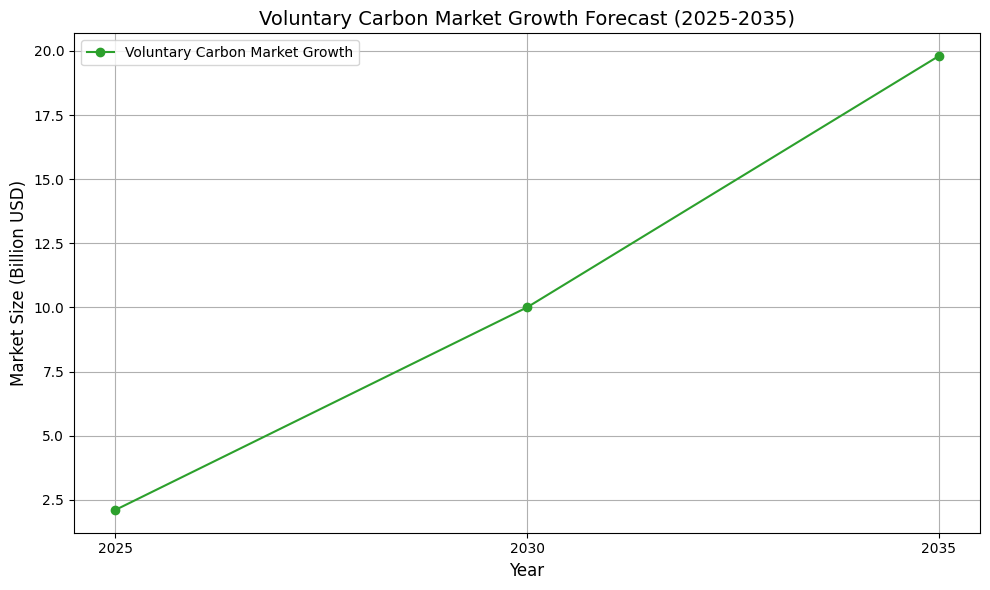
By 2030, the carbon credit market will likely have evolved into a sophisticated, global ecosystem where carbon credits are integral to both corporate and government climate strategies. The integration of carbon credits into broader climate financing, coupled with advancements in technology, will unlock new pathways for financing the green transition. The emphasis will be on high-quality credits, with greater emphasis on the additionality and permanence of emissions reductions.
The regulatory landscape will also become clearer, with well-established compliance systems under the Paris Agreement and market-driven voluntary initiatives that provide businesses with a toolkit to reduce their emissions and offset their impact. The carbon credit market will no longer be a niche or experimental segment of the economy; it will be a mainstream component of global finance and climate policy.
Ultimately, carbon credits will play a pivotal role in driving the decarbonization of the global economy, helping businesses, governments, and individuals to meet their climate commitments. By aligning carbon markets with the broader goals of sustainable development, the future of carbon credits will not only be about mitigating climate change but also about fostering resilient, inclusive, and sustainable economies.
If you are planning a carbon credit project, ensure that you choose the right methodology by consulting experts and conducting thorough due diligence. If you’re unsure about the methodology for your project, contact us today to ensure you select the most suitable framework for your carbon offset goals.